


- Rings (known in Japan as The Ring: Rebirth) is a 2017 American supernatural psychological horror film directed by F. Javier Gutiérrez, written by David Loucka, Jacob Aaron Estes and Akiva Goldsman and starring Matilda Lutz, Alex Roe, Johnny Galecki, Aimee Teegarden, Bonnie Morgan and Vincent D'Onofrio. It is the third installment in The Ring series, following the previous installments The Ring (2002) and The Ring Two (2005), and is based on elements of Spiral by Kôji Suzuki.
- Principal photography began on March 23, 2015, in Atlanta. The film was released in the United States on February 3, 2017, and opened #2 in the box office. The film has an 8% approval rating on Rotten Tomatoes and grossed $83 million worldwide against its $25 million budget.
- Contents
- 1 Plot
- 2 Cast
- 3 Production
- 3.1 Filming
- 3.2 Post-production
- 4 Release
- 4.1 Marketing
- 4.2 Home media
- 5 Reception
- 5.1 Box office
- 5.2 Critical response
- 6 Sequel
- 7 Notes
- 8 References
- 9 External links
- Plot
- In 2013, on an airplane bound for Seattle, a man reveals that he has watched Samara Morgan's cursed videotape. Another passenger reveals she has seen the tape too and asks the man if he made a copy; he replies that he did not. Moments later, Samara causes the airplane to crash.
- Two years later in 2015, college professor Gabriel Brown buys a VCR, discovering the videotape inside. Elsewhere, student Julia sees her boyfriend Holt off to college but grows concerned when he falls out of contact. She is inspired to find him when a panicked girl contacts her, asking for Holt's whereabouts. Julia meets Gabriel and finds a group of people known as the Sevens, who are involved in an experiment involving the cursed video. The group film themselves watching the video before passing the footage to another person called a "tail".
- Julia recognizes the panicked girl, Skye, who takes her to her apartment to have her watch the video, but Holt warns her not to. Julia locks herself in the bathroom as Samara kills Skye. Holt reveals that he has watched the tape as well and has 12 hours left. Julia watches his copy and when she picks up the phone, she experiences a vision of a door. The phone burns a mark on her hand. Julia's version of the video cannot be copied and contains additional images of a mysterious woman: she realizes they must cremate Samara's physical remains.
- Gabriel sends them to Sacrament Valley, where Samara was given a proper burial after the residents of Moesko Island refused to accept the remains.[N 1] He realizes the mark on Julia's hand is Braille, translates it, and goes to warn them. Julia and Holt find an unmarked tomb, but when they break in, they find it empty. They are caught and taken to a blind man named Galen Burke, who claims Samara's body was entombed by the local priest but a flood came, leading the priest to bury her in a potter's field outside town.
- Heading for the field, Julia and Holt are stopped due to a car crash and learn Gabriel was involved. He tries to warn Julia of his discovery but is killed by a falling utility pole. After experiencing a vision of Samara's mother Evelyn, Julia and Holt return to town. Julia goes to the church and discovers a hidden chamber beneath the bell tower, finding evidence that Evelyn was imprisoned there while pregnant, held in captivity by the priest after being raped before she escaped eight months into the pregnancy.
- Julia visits Burke and explains her findings. He attacks her, revealing he is the priest as well as Samara's biological father, having blinded himself to escape the reach of her powers. Julia pushes him down the stairs, temporarily incapacitating him. Holt rushes to Burke's house, where he is knocked unconscious. Julia discovers Samara's skeleton behind a wall, and Burke tries to strangle her to prevent her from cremating Samara's remains. He claims the cremation would unleash an unspeakable evil upon the world, and that he has killed several people who previously attempted to do the same. Suddenly, a swarm of cicadas fly in, summoning Samara through Julia's phone. Samara cures Burke's blindness and kills him. Holt recovers and rushes to Julia's aid. That night, he and Julia cremate Samara's corpse, in an attempt to appease her spirit once and for all, and return home.
- While Julia is in the shower, Holt notices a voicemail from Gabriel, who warns him of the Braille, which Holt begins to translate. In the bathroom, Julia peels away the skin where the mark was, revealing grey skin underneath. She begins to cough up black hair, from which a cicada is born. Meanwhile, Julia's copy of the cursed video is sent to everyone on her contact list, which becomes viral, despite Holt's futile attempts to disconnect the computer. As his computer glitches, the Braille translation is revealed to be "rebirth", as Samara is reborn in Julia, seeing Samara's face in her mirror instead of her own.
RING ( JEWELLERY)
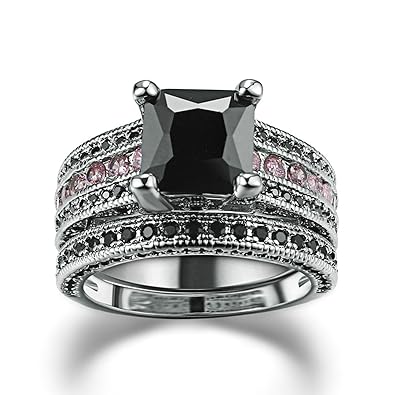
- Rings always fit snugly around or in the part of the body they ornament, so bands worn loosely, like a bracelet, are not rings. Rings may be made of almost any hard material: wood, bone, stone, metal, glass, gemstone or plastic.
- A ring is a round band, usually of metal, worn as ornamental jewellery. The term "ring" by itself always denotes the finger ring, but when worn as an ornament elsewhere, the body part is always specified, e.g. earrings, neck rings, arm rings, and toe rings. Rings always fit snugly around or in the part of the body they ornament, so bands worn loosely, like a bracelet, are not rings. Rings may be made of almost any hard material: wood, bone, stone, metal, glass, gemstone or plastic. They may be set with gemstones (diamond, ruby, sapphire or emerald) or with other types of stone or glass.
- Although people wear some rings as mere ornaments, or as conspicuous displays of wealth, rings have symbolic functions in relation to marriage, exceptional achievement, high status or authority, membership in an organization, and the like. Rings can be made to sport insignia to be transferred in an impression in a wax seal, or outfitted with a small compartment in which to conceal things. In myth, fable, and fiction, rings are often endowed with spiritual or supernatural significance.
- In Scandinavia, Germany and Netherlands, it is most common that both parts wear engagement rings. At the wedding ceremony the woman gets another ring, sometimes the man as well. Traditionally, the wedding band is the most spectacular ring in Sweden, compared in the USA where it is the opposite. Due to globalization, these traditions looses it meaning and today it is up to one and each to decide how they want to propose and get married. We see a growing trend today among the younger generations where they choose more spectacular engagement rings, often diamond rings. This is probably an effect from social medias where we get inspiration from around the world. Both the princesses of Sweden, Madeleine and Victoria have engagement rings with a big center diamond and more simple wedding bands.
- The most important thing to have in mind when you choose the ring of your dreams is the comfort and fit. A thinner ring fits a person with small hands better and a person with bigger hands can carry a wider ring without give up the comfort. If you choose thinner engagement rings you might complete with wider wedding bands and vice versa for the optimal comfort.
- What you also should consider before choosing an engagement ring is to choose one that might fit a future wedding band. Some want the same metal in both rings while other prefere the contrast between white and yellow gold for example. There is no right or wrong but VANBRUUN recommend you to keep this in mind while you choose your engagement ring. If you prefer silver colored rings you might want white gold or platinum. Looking for anything else? You might like yellow gold or rose gold.
ABOUT ENGAGEMENT RINGS

Ring, circular band of gold, silver, or some other precious or decorative material that is worn on the finger. Rings are worn not only on the fingers but also on toes, the ears (see earring), and through the nose. Besides serving to adorn the body, rings have functioned as symbols of authority, fidelity, or social status.
- Basically, a ring consists of three parts: the circle, or hoop; the shoulders; and the bezel. The circle can have a circular, semicircular, or square cross-section, or it can be shaped as a flat band. The shoulders consist of a thickening or enlargement of the circle wide enough to support the bezel. The bezel is the top part of a ring; it may simply be a flat table, or it may be designed to hold a gem or some other ornament.
- The earliest existing rings are those found in the tombs of ancient Egypt. The Egyptians primarily used signet, or seal, rings, in which a seal engraved on the bezel can be used to authenticate documents by the wearer. Egyptian seal rings typically had the name and titles of the owner deeply sunk in hieroglyphic characters on an oblong gold bezel. The ancient Greeks were more prone to use rings simply for decoration, and in the Hellenistic period the bezel began to be used to hold individual cabochon stones, such as carnelians and garnets, or vitreous pastes. In Rome rings were an important symbol of social status. In the early centuries of the Roman Republic, most rings were of iron, and the wearing of gold rings was restricted to certain classes, such as patricians who had held high office. But by the 3rd century BC the privilege of wearing rings had been extended to the class of knights, or equites, and by the 3rd century AD, during the Roman Empire, practically any person except a slave was allowed to wear a gold ring. The Romans are also thought to have originated the custom of betrothal rings, or engagement rings, symbolizing a promise of marriage to a member of the opposite sex.
HAND ART-RINGS

- Art jewelry is one of the names given to jewelry created by studio craftspeople. As the name suggests, art jewelry emphasizes creative expression and design, and is characterized by the use of a variety of materials, often commonplace or of low economic value. In this sense, it forms a counterbalance to the use of "precious materials" (such as gold, silver and gemstones) in conventional or fine jewelry, where the value of the object is tied to the value of the materials from which it is made. Art jewelry is related to studio craft in other media such as glass, wood, plastics and clay; it shares beliefs and values, education and training, circumstances of production, and networks of distribution and publicity with the wider field of studio craft. Art jewelry also has links to fine art and design.
- While the history of art jewelry usually begins with modernist jewelry in the United States in the 1940s, followed by the artistic experiments of German goldsmiths in the 1950s, a number of the values and beliefs that inform art jewelry can be found in the arts and crafts movement of the late nineteenth century. Many regions, such as North America, Europe, Australasia and parts of Asia have flourishing art jewelry scenes, while other places such as South America and Africa have been developing the infrastructure of teaching institutions, dealer galleries, writers, collectors and museums that sustain art jewelry.
RINGS FOR GIRLS

- A ring is a round band, usually of metal, worn as ornamental jewellery. The term "ring" by itself always denotes the finger ring, but when worn as an ornament elsewhere, the body part is always specified, e.g. earrings, neck rings, arm rings, and toe rings. Rings always fit snugly around or in the part of the body they ornament, so bands worn loosely, like a bracelet, are not rings. Rings may be made of almost any hard material: wood, bone, stone, metal, glass, gemstone or plastic. They may be set with gemstones (diamond, ruby, sapphire or emerald) or with other types of stone or glass.
BOYS RINGS

- Although people wear some rings as mere ornaments, or as conspicuous displays of wealth, rings have symbolic functions in relation to marriage, exceptional achievement, high status or authority, membership in an organization, and the like. Rings can be made to sport insignia to be transferred in an impression in a wax seal, or outfitted with a small compartment in which to conceal things. In myth, fable, and fiction, rings are often endowed with spiritual or supernatural significance.

- Julia visits Burke and explains her findings. He attacks her, revealing he is the priest as well as Samara's biological father, having blinded himself to escape the reach of her powers. Julia pushes him down the stairs, temporarily incapacitating him. Holt rushes to Burke's house, where he is knocked unconscious. Julia discovers Samara's skeleton behind a wall, and Burke tries to strangle her to prevent her from cremating Samara's remains. He claims the cremation would unleash an unspeakable evil upon the world, and that he has killed several people who previously attempted to do the same. Suddenly, a swarm of cicadas fly in, summoning Samara through Julia's phone. Samara cures Burke's blindness and kills him. Holt recovers and rushes to Julia's aid. That night, he and Julia cremate Samara's corpse, in an attempt to appease her spirit once and for all, and return home.

- While Julia is in the shower, Holt notices a voicemail from Gabriel, who warns him of the Braille, which Holt begins to translate. In the bathroom, Julia peels away the skin where the mark was, revealing grey skin underneath. She begins to cough up black hair, from which a cicada is born. Meanwhile, Julia's copy of the cursed video is sent to everyone on her contact list, which becomes viral, despite Holt's futile attempts to disconnect the computer. As his computer glitches, the Braille translation is revealed to be "rebirth", as Samara is reborn in Julia, seeing Samara's face in her mirror instead of her own.

- Ring, circular band of gold, silver, or some other precious or decorative material that is worn on the finger. Rings are worn not only on the fingers but also on toes, the ears (see earring), and through the nose. Besides serving to adorn the body, rings have functioned as symbols of authority, fidelity, or social status.

- The earliest existing rings are those found in the tombs of ancient Egypt. The Egyptians primarily used signet, or seal, rings, in which a seal engraved on the bezel can be used to authenticate documents by the wearer. Egyptian seal rings typically had the name and titles of the owner deeply sunk in hieroglyphic characters on an oblong gold bezel. The ancient Greeks were more prone to use rings simply for decoration, and in the Hellenistic period the bezel began to be used to hold individual cabochon stones, such as carnelians and garnets, or vitreous pastes. In Rome rings were an important symbol of social status. In the early centuries of the Roman Republic, most rings were of iron, and the wearing of gold rings was restricted to certain classes, such as patricians who had held high office. But by the 3rd century BC the privilege of wearing rings had been extended to the class of knights, or equites, and by the 3rd century AD, during the Roman Empire, practically any person except a slave was allowed to wear a gold ring. The Romans are also thought to have originated the custom of betrothal rings, or engagement rings, symbolizing a promise of marriage to a member of the opposite SHIRTS

- A shirt is a cloth garment for the upper body (from the neck to the waist).
- Originally an undergarment worn exclusively by men, it has become, in American English, a catch-all term for a broad variety of upper-body garments and undergarments. In British English, a shirt is more specifically a garment with a collar, sleeves with cuffs, and a full vertical opening with buttons or snaps (North Americans would call that a "dress shirt", a specific type of "collared shirt"). A shirt can also be worn with a necktie under the shirt collar.

- Shirt, any of a variety of garments having sleeves and worn on the upper part of the body, often under a coat, jacket, or other garment. Shirts were worn as early as the 18th dynasty of ancient Egypt (c. 1539–1292 BCE); they were made of a rectangular piece of linen, folded and sewn up the sides, with openings left for the arms and a hole cut at the fold for the head. There are also shirts preserved from ancient Egypt that have long, tight sleeves sewn into the armholes.
- Toward the end of the Middle Ages, when clothing became rather closely fitted, the shirt gradually increased in importance. During the 14th century, shirts worn by the Normans developed a neckband and cuffs. By the end of the 15th century, shirts were made in a variety of fabrics, such as wool, linen, and sometimes silk, for royalty.
- Shirts began to be embellished with embroidery, lace, and frills in the 16th century, and men’s outer garments—the doublet, or jacket—had a low neckline so that the shirt showed across the chest. By the end of that century, the shirt frill had developed into the ruff, which was a mark of the aristocracy. A law, in fact, was passed in England that forbade persons without social rank from wearing elaborately decorated shirts. At the beginning of the 17th century, the doublet had become so short that the ruffled shirt was visible between it and the breeches. The new style of men’s dress initiated in 1666, when Charles II of England adopted the long waistcoat, however, covered up most of the shirt.
- Pause
- Unmute
- Remaining Time -0:01
- Fullscreen
- In the late 18th and early 19th centuries, the neckcloth was so elaborate and voluminous that the valet of English dandy Beau Brummell sometimes spent a whole morning getting it to sit properly. Brummell set the mode in 1806 for the ruffled shirt for both day and evening wear. Men’s clothing became more sombre in the Victorian age. High neckcloths were abandoned for collars and ties more or less the same as those worn in the 20th and 21st centuries. Men’s shirts in the 1960s were made in a variety of stripes, patterns, and colours previously not worn. In the 20th century, women’s shirts were made on lines similar to men’s, though they usually included darts in the back and in the front to make them more form-fitting.
CONCERT T-SHIRTS
- A concert T-shirt is a T-shirt that is associated with a concert or a concert tour, usually rock or metal. Bands and musical groups often promote themselves by creating and selling or giving away T-shirts at their shows, tours and events. A concert T-shirt typically contains silk screened graphics of the name, logo, or image of a musical performer. A popular graphic on the rear of the T-shirts is a listing of information about the band's current tour, including tour cities (sometimes specifying venues) and corresponding dates.[1]
- One of the most popular colors for concert T-shirts is a flat black.[2][3] Fans purchase or obtain these shirts to wear to future concerts, often with jeans, dark colored trousers or skirts. Fans may wear the shirt of one band to a concert of another to show their taste in a particular type of music or loyalty to another band or type of music.
- A tourist T-shirt (or souvenir T-shirt) is a shirt associated with travel or a holiday. In recent years,[when?] T-shirts have become a popular gift or souvenir. Tourist T-shirt designs are typically screen printed with pictures and words directly associated with a particular city, country or culture. The T-shirts express or show something about the place or places a person has been.
- A course T-shirt is a printed T-shirt with a military unit's insignia on it, printed up as a souvenir of attending and/or graduating a course of instruction.[4] Printed shirts bearing unit insignia date back to at least the Second World War.[5]
- Fashion is a popular aesthetic expression in a certain time and context, especially in clothing, footwear, lifestyle, accessories, makeup, hairstyle and body proportions.[1] Whereas a trend often connotes a very specific aesthetic expression, and often lasting shorter than a season, fashion is a distinctive and industry-supported expression traditionally tied to the fashion season and collections.[2] Style is an expression that lasts over many seasons, and is often connected to cultural movements and social markers, symbols, class and culture (ex. Baroque, Rococo, etc). According to sociologist Pierre Bourdieu, fashion connotes “the latest fashion, the latest difference.”[3]
- Even though they are often used together, the term fashion differs from clothes and costume, where the first describes the material and technical garment, whereas the second has been relegated to special senses like fancy-dress or masquerade wear. Fashion instead describes the social and temporal system that "activates" dress as a social signifier in a certain time and context. Philosopher Georgio Agamben connects fashion to the current intensity of the qualitative moment, to the temporal aspect the Greek called kairos, whereas clothes belong to the quantitative, to what the Greek called chronos.[4]
- Exclusive brands aspire for the label haute couture, but the term is technically limited to members of the Chambre Syndicale de la Haute Couture in Paris.[5]
- With increasing mass-production of consumer commodities at cheaper prices, and with global reach, sustainability has become an urgent issue amongst politicians, brands and consumers.[6]
- Toward the end of the Middle Ages, when clothing became rather closely fitted, the shirt gradually increased in importance. During the 14th century, shirts worn by the Normans developed a neckband and cuffs. By the end of the 15th century, shirts were made in a variety of fabrics, such as wool, linen, and sometimes silk, for royalty.
- Shirts began to be embellished with embroidery, lace, and frills in the 16th century, and men’s outer garments—the doublet, or jacket—had a low neckline so that the shirt showed across the chest. By the end of that century, the shirt frill had developed into the ruff, which was a mark of the aristocracy. A law, in fact, was passed in England that forbade persons without social rank from wearing elaborately decorated shirts. At the beginning of the 17th century, the doublet had become so short that the ruffled shirt was visible between it and the breeches. The new style of men’s dress initiated in 1666, when Charles II of England adopted the long waistcoat, however, covered up most of the shirt.
- Toward the end of the Middle Ages, when clothing became rather closely fitted, the shirt gradually increased in importance. During the 14th century, shirts worn by the Normans developed a neckband and cuffs. By the end of the 15th century, shirts were made in a variety of fabrics, such as wool, linen, and sometimes silk, for royalty.
Shirts began to be embellished with embroidery, lace, and frills in the 16th century, and men’s outer garments—the doublet, or jacket—had a low neckline so that the shirt showed across the chest. By the end of that century, the shirt frill had developed into the ruff, which was a mark of the aristocracy. A law, in fact, was passed in England that forbade persons without social rank from wearing elaborately decorated shirts. At the beginning of the 17th century, the doublet had become so short that the ruffled shirt was visible between it and the breeches. The new style of men’s dress initiated in 1666, when Charles II of England adopted the long waistcoat, however, covered up most of the shirt.


Tourist T-shirt

 Course T-shirts

SHIRTS FOR GIRLS


RINGS
 Reviewed by fashiongallexy
on
August 23, 2019
Rating:
Reviewed by fashiongallexy
on
August 23, 2019
Rating:
Reviewed by fashiongallexy
on
August 23, 2019
Rating:


No comments: